AegixFMEA Platform

Engineering intelligence for FMEA

Your engineering data already contains the knowledge your FMEA needs.

Aegix combines a central engineering model with AI agents that carry Design and Process FMEA from specification through to risk analysis and improvement actions. Your experts review and validate every step.

Less time building the FMEA. More time thinking about the risk.

AI-assisted AIAG & VDA DFMEA & PFMEA Requirements traceability ALM integration Human-in-the-loop
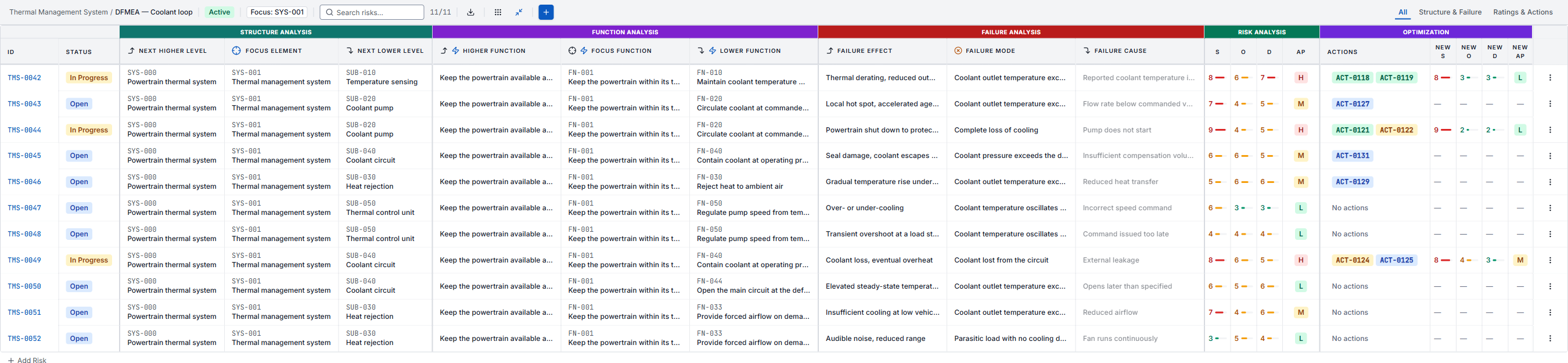
app.aegix.eu / worksheet
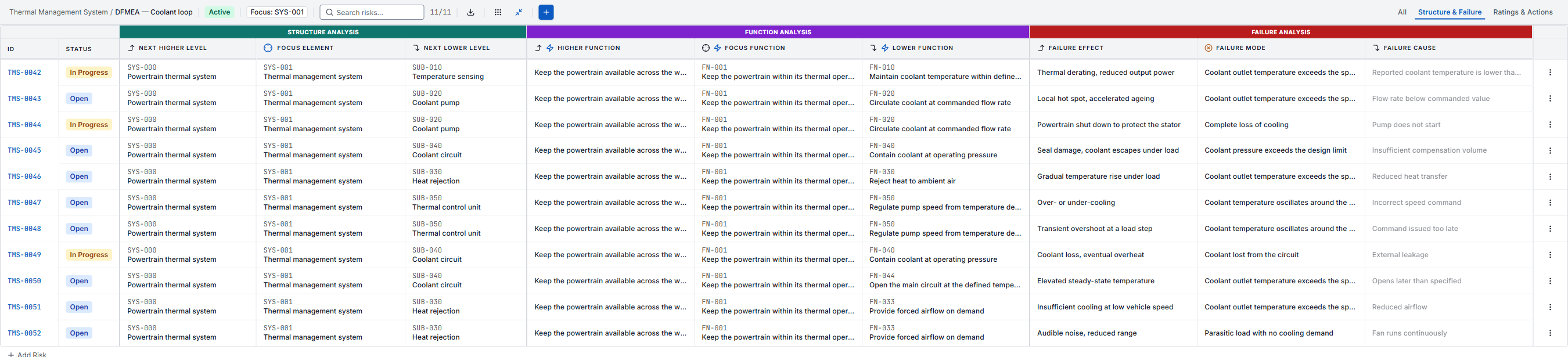
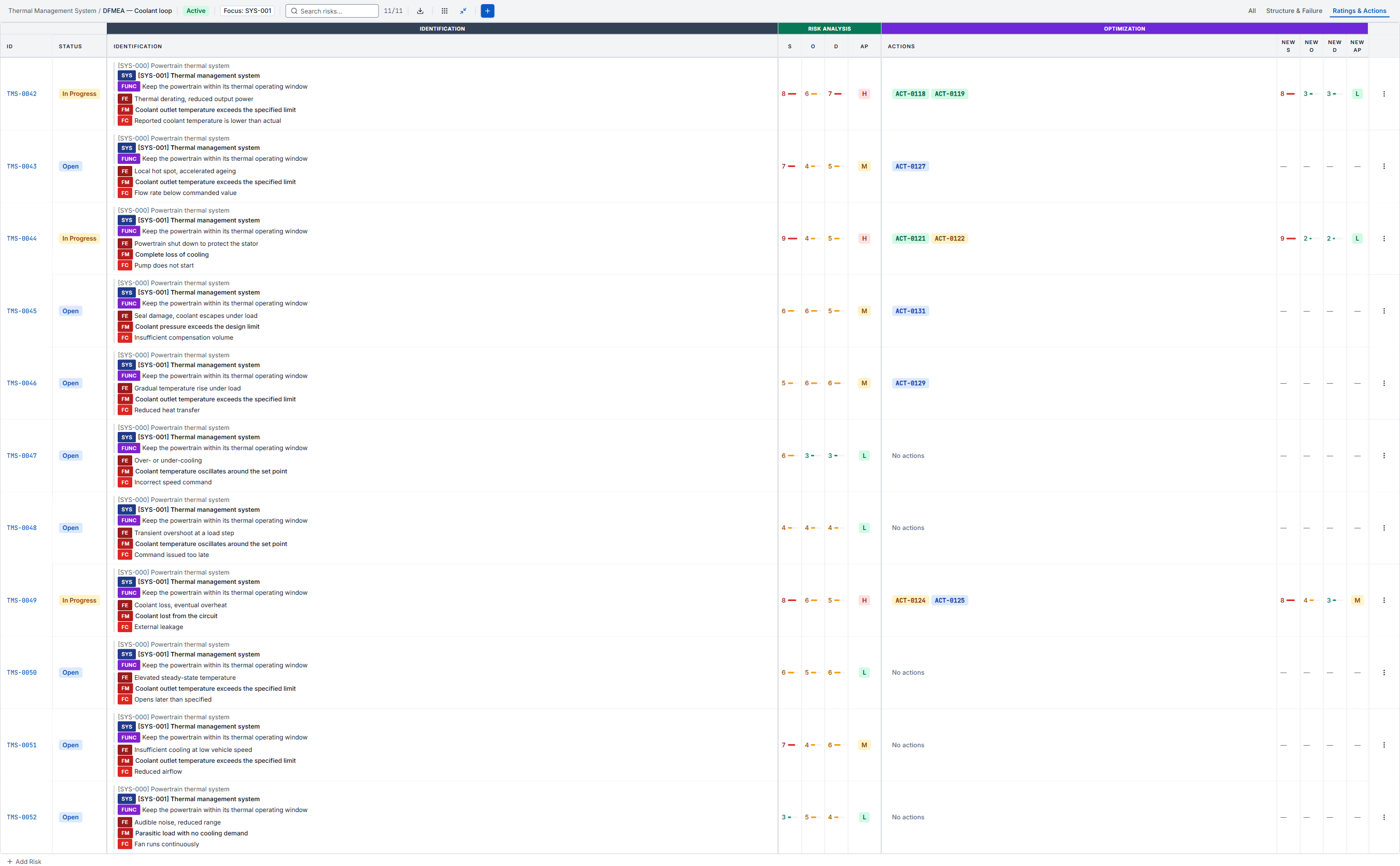
A complete AIAG-VDA DFMEA worksheet in Aegix, with every column group side by side: structure analysis, function analysis, failure analysis, the severity, occurrence and detection ratings with the action priority they produce, and optimisation with the linked actions and re-rated values.

Engineers spend hours moving knowledge that already exists.

The information needed for an FMEA already exists — spread across system specifications, requirements, architecture documents, design descriptions, previous FMEAs, test documentation and ALM systems. Engineers then spend hours finding it, interpreting it and transferring it into another structure.

Engineering information Specifications Requirements Existing FMEAs Engineering documentation ALM data Aegix extract · structure · relate Structured risk analysis Functions Failure modes Causes & effects Controls & risks Actions

The analysis opens with its structure already drafted from your documents.

Human-in-the-loop

AI can suggest. Engineers decide.

Aegix is built to amplify engineering judgement. AI can identify relevant information, propose relationships, suggest potential failure modes and surface areas that may deserve attention. Engineers review, challenge, modify and approve the analysis.

AI identifies→ Engineer evaluates→ Team validates→ Engineering decision

Every suggestion waits for an engineer to accept it.

Traceability

Connect the reasoning behind the FMEA.

An FMEA is a chain of engineering reasoning. Aegix keeps the links between its steps, so a failure mode still points back at the requirement it threatens and forward to the verification that covers it.

The FMEA becomes part of the engineering lifecycle.

Requirement
The system must maintain safe operating conditions.
Function
Maintain operating conditions within defined limits.
Failure mode
Operating condition exceeds the specified limit.
Cause
Temperature sensing failure.
Effect
Incorrect thermal control.
Risk
Potential degradation or safety consequence.
Mitigation
Diagnostic monitoring and protective strategy.
Verification
Test, requirement and evidence.

How it works

Understand. Structure. Reason. Trace.

Aegix combines AI with a structured engineering model.

1

Understand

Extract relevant engineering information from requirements, specifications, documents and existing analyses.

2

Structure

Turn unstructured information into engineering concepts and relationships — functions, failure modes, causes, effects, controls, actions.

3

Reason

Assist engineers in identifying potential failure modes, relationships and gaps in the analysis.

4

Trace

Connect risk analysis back to its engineering sources, and forward to mitigation, implementation and verification.

app.aegix.eu / dfmea-structure
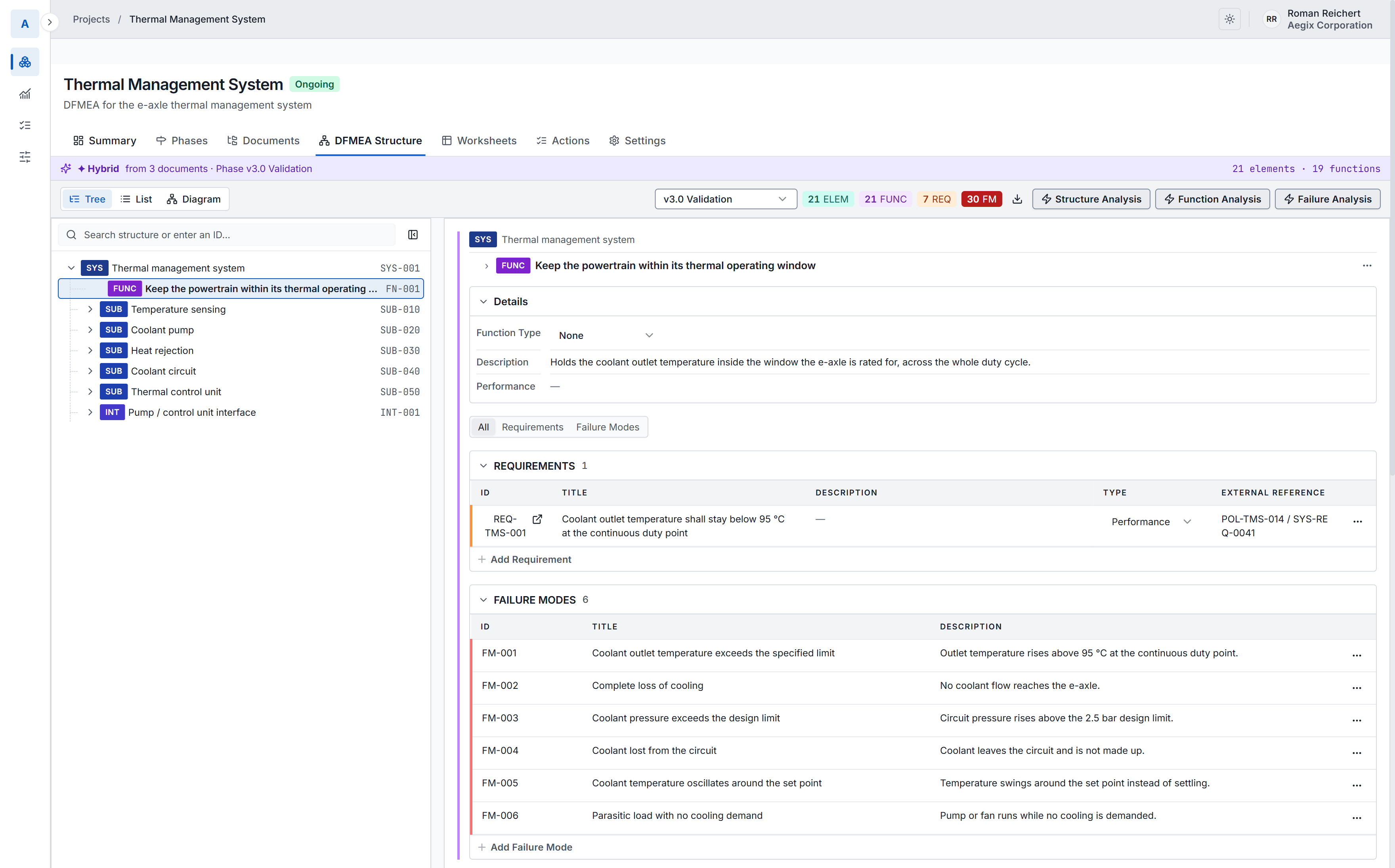
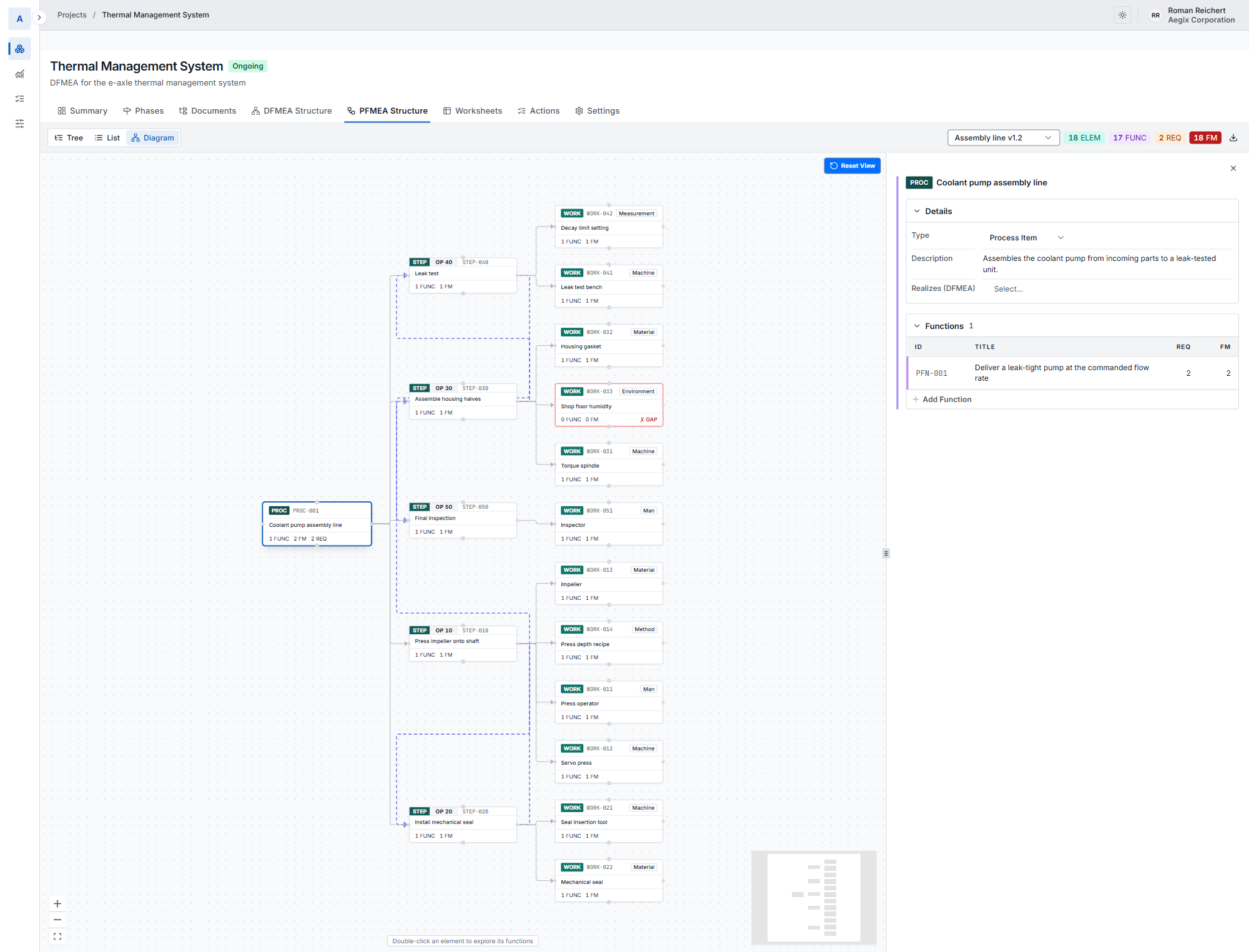
The DFMEA structure of a thermal management system in Aegix. A tree on the left holds the system, its function, five subsystems and an interface, each with its artifact code. The inspector on the right shows the selected function: its description, the requirement it has to meet with the Polarion item that requirement came from, and the six failure modes found for it.

The system, its subsystems, and the requirement and failure modes on the selected function.

Seeing the whole programme

Risk across the whole programme, on one screen.

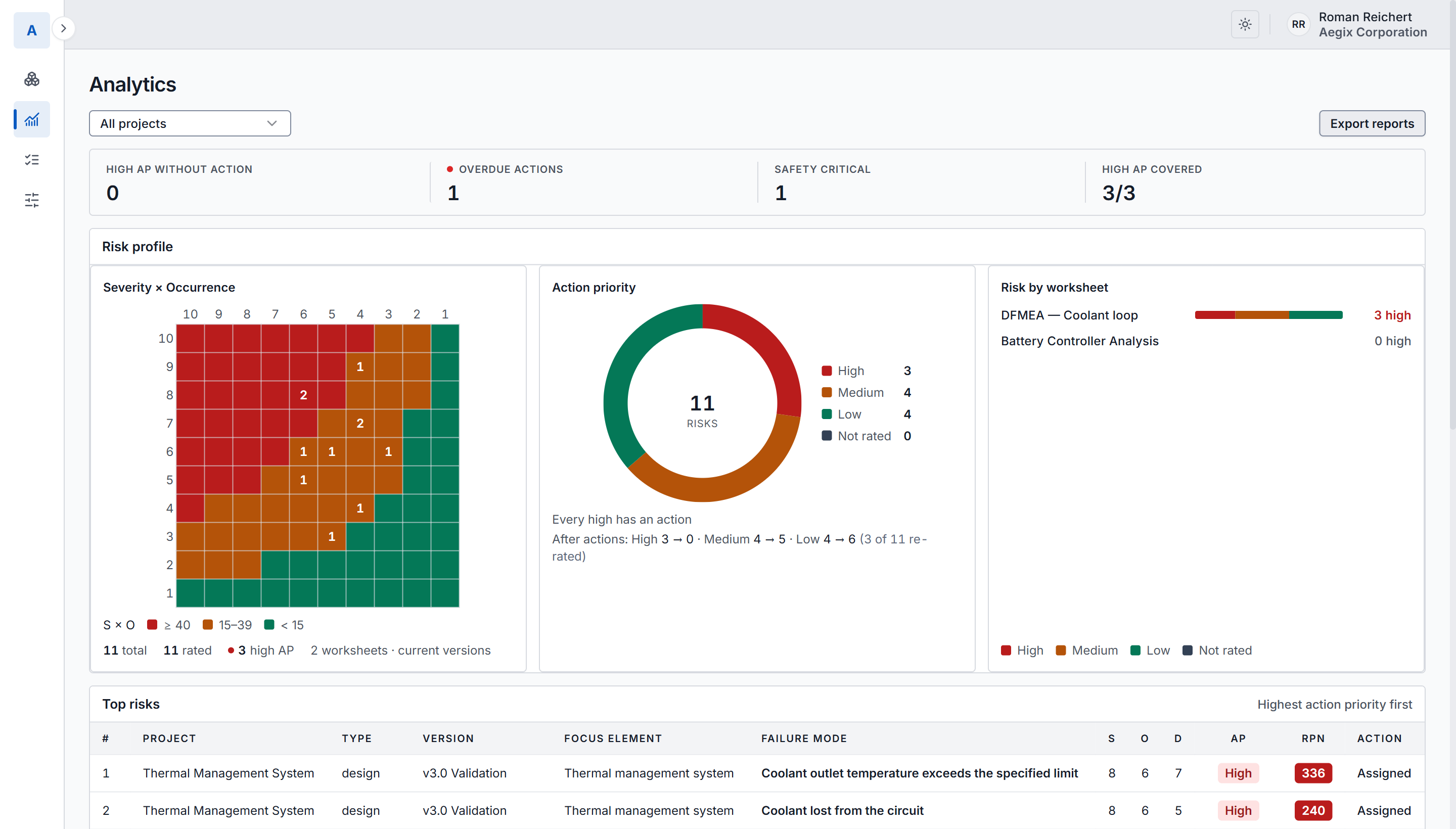
Action Priority distribution, High AP coverage, overdue actions and the risk profile — per worksheet, per project, or across the programme, with the analysis one click away from the number.

app.aegix.eu / analytics
The Aegix analytics screen: high Action Priority without an action, overdue actions, safety-critical count and High AP coverage across the top; below them a severity-by-occurrence matrix, the Action Priority distribution, risk by worksheet, and the highest-priority risks listed in order.

Action priority across every worksheet, with high-AP coverage and overdue actions.

Technology

An engineering model underneath the AI.

Knowledge extraction

AI processes requirements, specifications, FMEAs and engineering documentation to identify relevant concepts and relationships.

Structured representation

Information becomes a connected model that can support FMEA and risk analysis, rather than remaining unstructured text.

AI-assisted reasoning

AI operates inside engineering context, generating suggestions and relationships for engineers to review.

Traceability

Suggestions stay connected to the engineering information they came from.

Human-in-the-loop validation

Engineers remain responsible for reviewing and approving the resulting analysis.

Where it runs

Aegix runs in our cloud, or on your own infrastructure if your engineering data cannot leave it.

Engineering data→ Knowledge extraction→ Structured model→ AI assistance→ Engineer validation→ Risk analysis

Integrations

Your FMEA belongs in the engineering ecosystem.

Aegix reads requirements from Polarion and writes back to it, and takes the rest as files: specifications, existing FMEAs, drawings and control plans in; Excel worksheets, PDF reports and action lists out.

What goes in Polarion Requirements documents Specifications Existing FMEAs Drawings & control plans Aegix read & write What comes out FMEA Risk analysis Actions Excel & PDF export

Requirements arrive carrying their Polarion id, and keep it.

app.aegix.eu / connected-sources
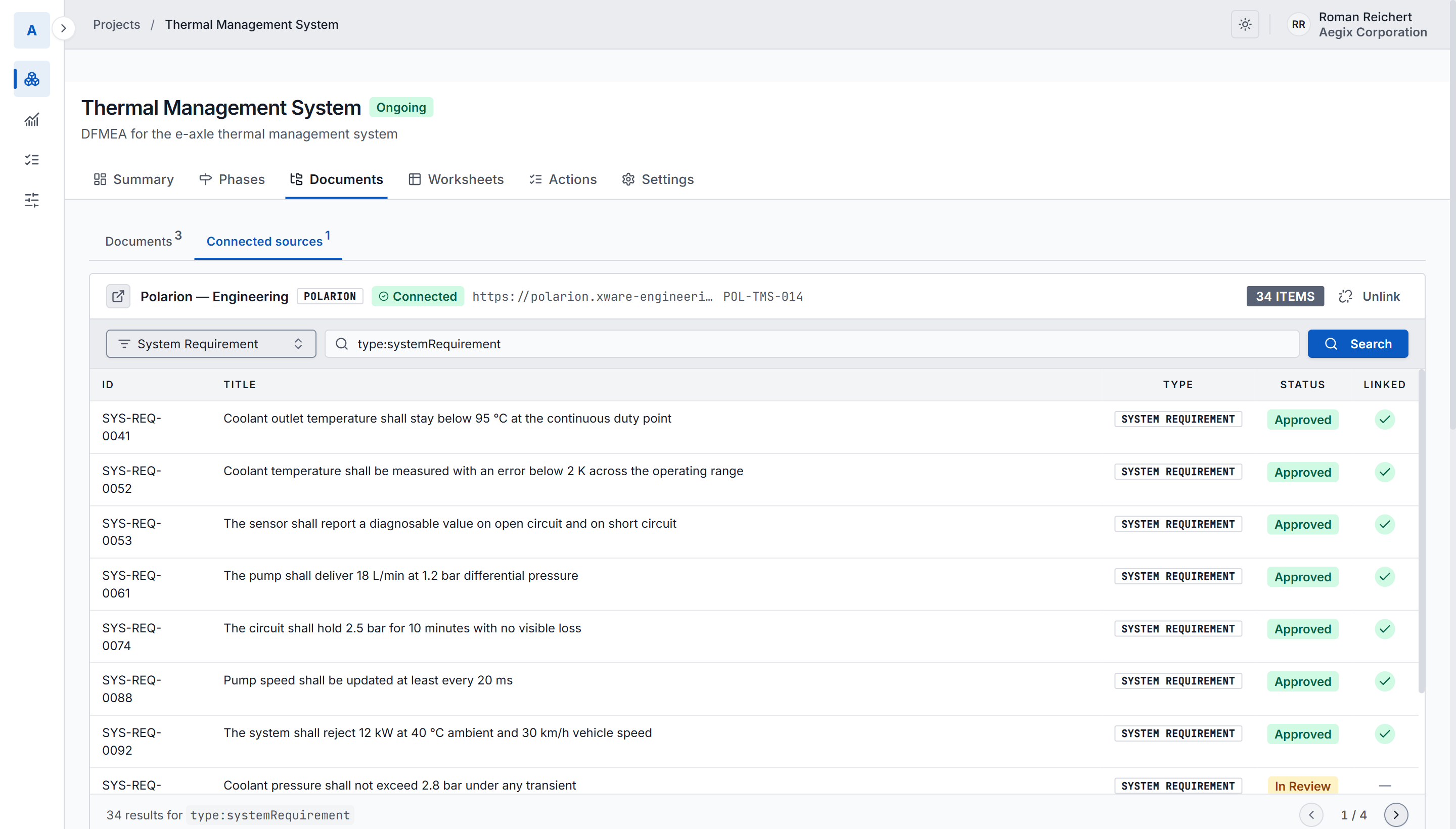
A Polarion connection inside Aegix. The connector shows as connected with its server address and the linked Polarion project, and the panel below browses that project’s system requirements — each with its Polarion id, title, type and status, and a tick against the ones already pulled into the analysis.

Browsing the linked Polarion project. A tick marks the requirements already pulled into the analysis.

Method

The method you already follow, configured the way you follow it.

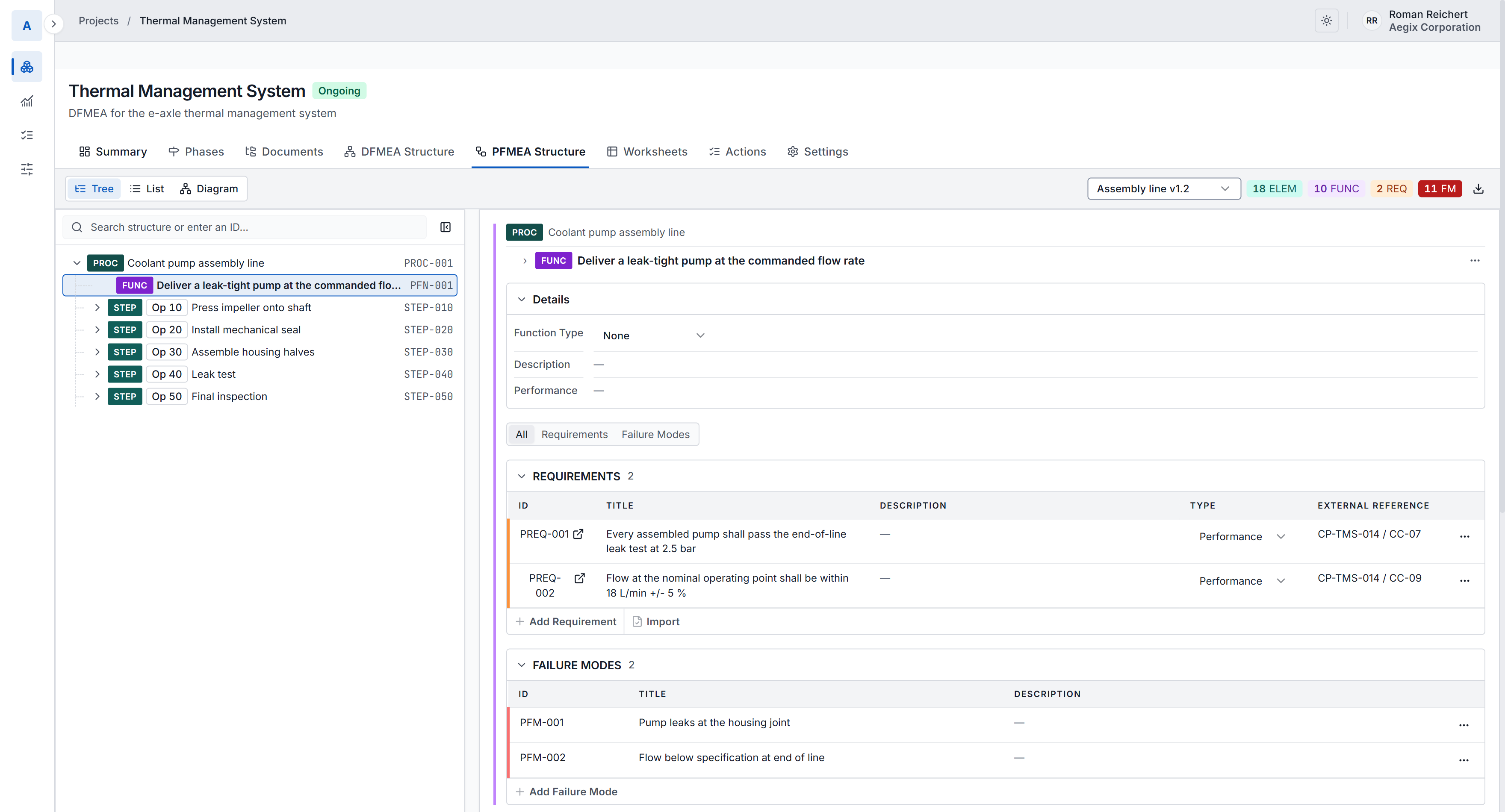
Aegix covers design FMEA (DFMEA) and process FMEA (PFMEA) on the AIAG & VDA method, which it ships with as a ready starting point. Your engineering team still controls functions, failure modes, effects, causes, controls, risk evaluation, actions, responsibilities, reviews and approval.

Templates are configurable, so a team that uses different terminology, different rating scales or a different worksheet layout can set that up once and work the way it already works.

Knowledge reuse

Every FMEA you have already written is an input.

Every FMEA contains engineering knowledge that took experienced engineers time to create — and it usually stays trapped in previous projects, spreadsheets, documents and individual teams.

Project A Failure modes Known causes Existing controls Previous analysis Aegix relate · suggest · cite Project B Relevant knowledge Potential failure modes Reusable controls New engineering context

Your previous engineering work becomes an asset for the next project.

The difference

Traditional FMEA, and the same steps in Aegix.

Traditional FMEAWith Aegix
Search through documentsExtract relevant engineering information
Start from a blank tableStart from existing engineering knowledge
Manually transfer informationAI-assisted structuring
Discover gaps during reviewsSurface potential gaps earlier
FMEA isolated from engineeringConnected to requirements and ALM
Knowledge stays in projectsKnowledge becomes reusable

The time it gives back goes into thinking about the risk.

Who it's for

Designed for complex engineering.

For organisations developing complex and safety-critical products.

Automotive

Functional safety, electrification, software-intensive systems and complex E/E architectures.

Railway

System complexity, safety requirements and long engineering lifecycles.

Aerospace & defence

High-consequence systems where traceability and engineering judgement matter.

Medical devices

Structured risk analysis connected to product and verification information.

Industrial systems

Complex products where engineering knowledge spans multiple disciplines and tools.

Where it fits

Engineering discipline first.

Functional safety

Connect FMEA with the broader safety engineering process.

Systems engineering

Work with functions, architectures, interfaces and dependencies.

Requirements engineering

Maintain relationships between requirements and risk analysis.

Verification & validation

Connect mitigations and controls with verification evidence.

ALM

Bring FMEA closer to the systems where development happens.

Accountability

AI you can challenge.

Engineering AI should not simply give you an answer. It should give you something you can examine.

Review
what the system proposes.
Challenge
assumptions and relationships.
Modify
the generated analysis.
Trace
information back to its engineering context.
Approve
the final engineering decision.
Where this is going

From AI-assisted FMEA to engineering intelligence.

FMEA is only the beginning. The same engineering intelligence can eventually be applied continuously across the product lifecycle.

From analysing risk periodically, to continuously understanding how engineering changes affect risk.

A requirement
changes.
Aegix
identifies the affected function.
Failure modes
related to it are identified.
Mitigations
already in place are reviewed.
Risk impact
is surfaced.
The engineer
decides what needs to change.

Who builds it

Built by engineers who understand the problem.

Aegix is developed by XWARE, an engineering company focused on complex software and cyber-physical systems. Our work spans functional safety, cybersecurity, systems engineering, requirements and ALM, verification and validation, and AI-assisted engineering.

Aegix comes out of the engineering work XWARE already does.

Start a conversation.

Ask a question, arrange a demo, or tell us what you would want to try Aegix on.

Tell us who you are.

We need an address that can reply.

Which organisation is this for?

A few words on what this is about.

Tell us a little about what you need.

Or write to hello@aegix.eu.

Aegix is a product of XWARE, developed with a grant from Innoviris. XWARE is a partner of hub.brussels.